How to Trade Airbus After H1 Earnings


Airbus is the world’s largest manufacturer of commercial aircraft in terms of deliveries, and is also active in helicopters, defence and space.
Last week, it published its half-year 2026 results. The results were largely impressive, with the aircraft manufacturer delivering double digit growth on the top and bottom lines. However, whilst Airbus also reiterated its full year guidance, hitting its targets will require delivering considerably more aircraft in the second half of the year.
Keep reading to find out more and learn what analysts are predicting for the stock.
The information in this article is provided for educational purposes only and does not constitute financial advice. Consult a financial advisor before making investment decisions.
- The Invest.MT5 Account allows you to buy real stocks and shares from some of the largest stock exchanges in the world.
- Risk Warning: Past performance is not a reliable indicator of future results or future performance. All trading is high risk, and you can lose more than you risk on a trade. Never invest more than you can afford to lose as some trades will lose and some trades will win. Start small to understand your own risk tolerance levels or practice on a demo account first to build your knowledge before investing.
- Trading is not suitable for everyone. Trading is highly speculative and carries a significant risk of loss. While it offers potential opportunities, it also involves high volatility, and leveraged trading can amplify both gains and losses. Retail investors should fully understand these risks before trading.

Airbus H1 Earnings Performance Summary
Airbus’s recent results report both H1 and Q2 performance; however, Airbus compiles analyst consensus figures on a quarterly basis only. Therefore, the table below highlights Airbus’s performance in the second quarter against the consensus.
H1 Key Takeaways
- Airbus delivered 351 commercial aircraft in the first half of 2026, up from 306 a year before.
- After a disappointing first quarter, Airbus delivered a record 237 commercial aircraft in Q2.
- Demand was robust, with gross commercial aircraft orders totalling 886, significantly higher than the 494 a year previously. Defence and Space order intake nearly doubled to €9.29 billion.
- Its order backlog amounted to 9,222 commercial aircraft at the end of June. For reference, Airbus delivered a total 793 commercial aircraft in FY25, meaning this sizeable backlog gives Airbus a high degree of revenue visibility.
- Consolidated H1 revenue rose 12% to €33.18 billion.
- Commercial aircraft revenue increased 15% to €23.88 billion, thanks to the higher number of deliveries.
- Helicopters revenue was flat at €3.68 billion which reflected “a less favourable delivery mix in the first half of 2026”.
- Defence and Space revenue rose 9% to €6.32 billion on higher volumes across all business units.
- Adjusted EBIT (Earnings Before Interest and Tax) rose 24% to €2.73 billion. Meanwhile, net income jumped 47% to €2.24 billion and EPS also rose 47% to €2.84.
- Commercial aircraft adjusted EBIT rose 16% to €1.99 billion.
- Helicopters adjusted EBIT fell 4% to €240 million.
- Defence and Space adjusted EBIT soared 84% to €487 million.
- Consolidated free cash flow before customer financing was negative €1.17 billion, an improvement from negative €1.61 billion in H1 2025, with the outflow driven by planned inventory build-up to support a production ramp-up. Airbus’s net cash position was €8.36 billion, down from €12.17 billion at the end of 2025.
- Airbus reiterated its full-year guidance, with the group targeting around 870 commercial aircraft deliveries, EBIT adjusted of around €7.5 billion and free cash flow before customer financing of around €4.5 billion.
Airbus 12-Month Analyst Stock Price Forecast
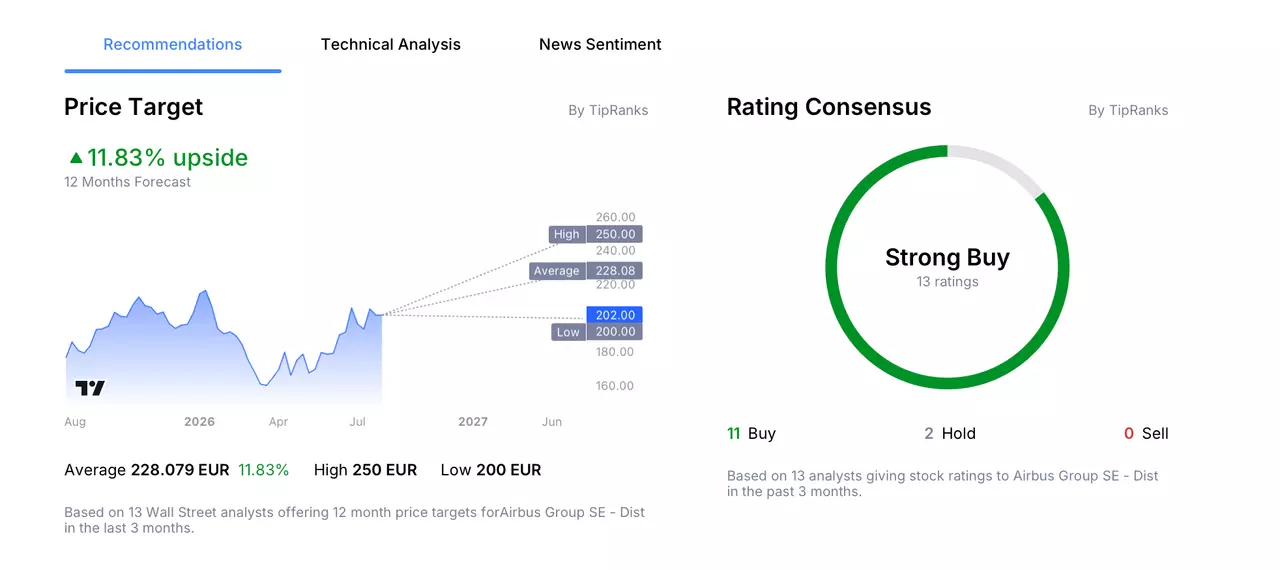
According to 13 Wall Street analysts, polled by TipRanks, offering a 12-month stock price forecast for Airbus over the past 3 months:
- Buy Ratings: 11
- Hold Ratings: 2
- Sell Ratings: 0
- Average Price Target: €228.08
- High Price Target: €250.00
- Low Price Target: €200.00
Trading Strategy Example: Airbus
The following trading examples are for educational purposes only and do not constitute investment advice. Investors should conduct independent research before making trading decisions. An example trading idea for Airbus could be as follows:
After a disappointing start to the year, Airbus turned things around in its second quarter, resulting in largely impressive H1 results.
The company reiterated its guidance, targeting around 870 commercial aircraft over the full year. However, after delivering 351 aircraft in the first half, it needs to deliver 519 more to meet its target, which doesn’t appear to leave much room for error.
Indeed, Airbus said that its guidance assumes “no additional disruptions to global trade or the world economy, air traffic, the supply chain, its internal operations, and its ability to deliver products and services”.
Particularly important to bear in mind there is the supply chain assumption. Airbus has faced persistent issues with suppliers in recent years, which have made it difficult for the group to meet rising demand for its aircraft. Indeed, issues with engine supplier Pratt & Whitney already caused Airbus to dial back plans to increase production of its A320 jets earlier this year.
Its heavily back-loaded delivery schedule and supplier issues introduce the potential for delivery disappointments which, if they materialise, could weigh on sentiment.
How to Buy Airbus Stock in 4 Steps
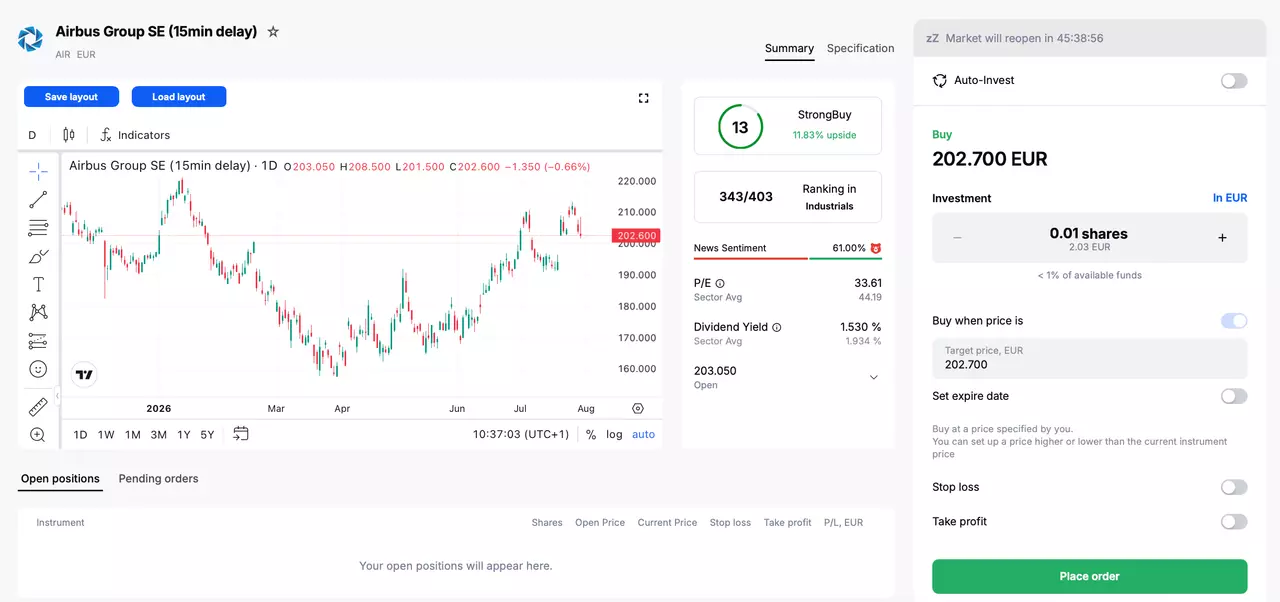
- Open an account with Admirals and complete the onboarding process to access the dashboard.
- Click on Trade or Invest on one of your live or demo accounts to open the Admirals Platform.
- Search for your stock in the search window at the top.
- Input your entry, stop-loss and take profit levels in the trading ticket.

Do You See the Airbus Stock Price Moving Differently?
If you believe there is a higher chance that the share price of Airbus will move lower, then you can also trade short using CFDs (Contracts for Difference). However, these have higher associated risks and are not suitable for all investors. Learn more about CFDs in this How to Trade CFDs article.
The given data provides additional information regarding all analysis, estimates, prognosis, forecasts, market reviews, weekly outlooks or other similar assessments or information (hereinafter “Analysis”) published on the websites of Admirals investment firms operating under the Admirals trademark (hereinafter “Admirals”) Before making any investment decisions please pay close attention to the following: