Mis on väärtpaberid ja kuidas nendega kaubelda?

|
Securities are one of the most common ways investors can increase their capital. You are probably already familiar with stocks, for example, but in our digital world, there are many other securities available to investors, which is why staying informed about them is extremely important for a successful investor. |

Table of contents
What are securities?
The term "security" refers to any financial instrument that can be converted into cash. Some common examples include stocks and bonds. Securities can also be thought of as financial contracts that give the holder a stake in an asset and can be bought or sold.
Types of securities
As the global economy has developed, a variety of securities have emerged to invest in. The most common and most interesting types of securities for retail investors are floating-rate (equity securities) and fixed-rate (debt securities) .
Equity securities
Equity securities are the most common form of securities and refer to shares of publicly traded companies , such as Apple , Disney, or Tesla . If a company wants to grow, it needs money. Companies can either borrow money from a bank, find private investors, or go to the capital markets and issue shares or securities to increase their capital.
When you buy securities or shares of publicly traded companies, you are actually buying ownership of the company . As the company makes a profit, you receive a portion of the profit in the form of dividends or a potential increase in the company's share price. You can learn more about dividends in the article "TOP Dividend Stocks for Extra Income" .
Debt securities
A debt security, or fixed-income security, is an investment that pays interest regularly until maturity, when the principal is returned. Fixed-interest securities are also called bonds.
When a company or government wants to borrow money, it can try to borrow from a bank or issue a bond (debt guarantee) . By issuing a bond, investors can buy it and thus lend money to the issuer. A bond gives the bondholder or buyer the right to receive the money back, along with interest, at a specified date.
Investing in bonds is much more complicated than investing in equity securities (e.g. stocks) . The corporate bond market is primarily intended for institutional investors. However, it is possible to capitalize on bonds through ETFs .
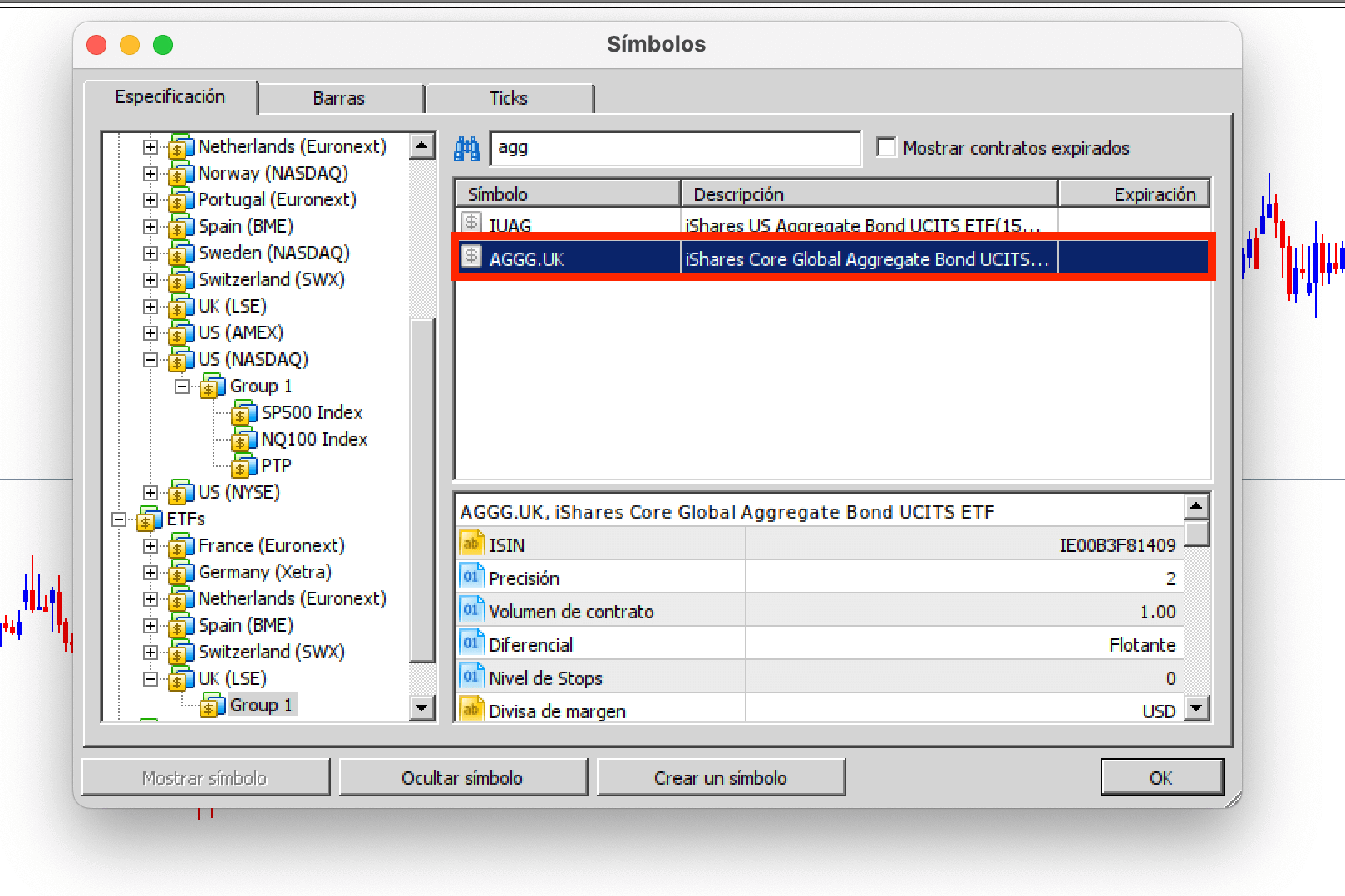
For example, investors can invest in the iShares Core Global Aggregate Bond UCITS ETF , which tracks an index of global bonds.
Mortgage backed bonds
Mortgage bonds are investments that are backed by real estate . When a person takes out a mortgage loan from a bank, the bank sells the loan to an investment bank to raise more capital for new loans.
An investment bank bundles multiple mortgage loans and sells them as mortgage bonds. They can then be bought and sold to other institutions.
Mortgage bonds played a major role during the 2008 stock market crash and are highly controversial.
Marketable securities
Marketable securities are a way for companies to make money with their cash reserves. A company needs cash reserves in case it needs to act quickly, such as acquiring another company.
Instead of simply letting the money sit around without earning interest, the company invests some of the money in short-term liquid securities. These securities typically have a maturity of less than a year, so the investments can be quickly converted into cash. These products consist primarily of debt securities (such as corporate bonds) and equity securities (such as stocks).
Now that you know a little more about the types of securities available, let's talk about how you can start buying and selling securities yourself.
How to invest in equity securities?
To buy stocks and ETFs, follow these three easy steps:
- Open a stock trading account.
- Download the stock trading platform.
- Open the trading window and make your first trade.
To open an account, simply visit the Admirals website and click the green button with the word “Register.” Then enter the required details, name, email address, and password.
Once you have registered, open your Dashboard . From here you can open your Invest.MT5 trading account, upload the required documents and go through the verification process. Once this is done and your application is approved, download the MetaTrader 5 stock trading platform.
Why invest in securities at Admirals?
If you are considering buying and selling equity securities or want to capitalize on debt securities through ETFs , we recommend that you open an Invest.MT5 account, with which you can enjoy the following benefits:
- The ability to invest in thousands of stocks and ETFs on the world's 15 largest exchanges.
- Free real-time data with no delays and no extra charges.
- The opportunity to create a passive income stream in the form of dividend payments.
- You can trade and invest on the world-famous MetaTrader 5 trading platform.
Frequently asked questions about securities
Is a stock synonymous with a security?
No, a stock, or equity security, is the most common type of security, referring to shares in publicly traded companies. A security, or any financial instrument that can be converted into cash, is a broader category that also includes, for example, bonds and derivatives.
Other articles that may interest you:
- How to start investing in stocks
- Warren Buffett's advice for successful investing
- How to start trading stocks online
Mostly: Admirals
As a regulated and award-winning broker, we offer access to the world's most popular trading platforms. Admirals offers the opportunity to trade contracts for differences (CFDs) on stocks, Forex, indices, commodities and exchange-traded funds (ETFs), and invest in stocks and ETFs.
Happy trading!
INFORMATION ON ANALYTICAL MATERIALS
This information represents additional information to all analyses, estimates, forecasts, predictions, market reviews, weekly forecasts and any other similar assessments or information (hereinafter referred to as the "Analysis") published on the Admirals website. Before making an investment decision, we ask you to pay attention to the following:
- This is a marketing communication. The content is published for informational purposes only and should not be construed as investment advice or a recommendation under any circumstances. It has not been prepared in accordance with legal requirements designed to promote the independence of investment research and is not subject to any trade embargo prior to the distribution of investment research.
- Every investment decision is a personal decision of the client and Admirals is not liable for any loss arising from the decision, regardless of whether the decision was based on the information provided in the Analysis or not.
- To protect the interests of clients and prevent damage to the objectivity of the Analysis, Admirals has established appropriate internal procedures for identifying and handling conflicts of interest.
- The analysis has been prepared by an independent analyst (Carolina Caro Mora, hereinafter "the author") based on the author's personal assessments.
- Although all reasonable measures have been taken to ensure that the sources of the Analysis are reliable and the information contained is presented as clearly, timely, accurately and completely as possible, Admirals does not guarantee the accuracy or completeness of the information contained in the Analysis.
- Information published in the analysis about the past or modeled performance of financial instruments does not constitute an express or implied promise, guarantee or indication by Admirals about the performance of future periods. The value of a financial instrument may increase or decrease, and the preservation of the value of the asset is not guaranteed.
- Leveraged products (including CFDs) are speculative in nature and can result in both loss and gain. Please ensure that you fully understand the risks involved before trading .