

How to Invest in Gold in 2026

Gold has been highly sought after by humans for thousands of years and continues to play a significant role in the investment world. Besides investing in the physical asset itself, there are a number of ways for investors to gain exposure to the precious metal.
In this article, we’ll explain why people invest in gold and evaluate some of the risks involved. We’ll also provide a step-by-step guide of how to invest in gold and highlight 4 ways of doing so.
The information in this article is provided for educational purposes only and does not constitute financial advice. Consult a financial advisor before making investment decisions.
Key Takeaways
- Investors may use gold for portfolio diversification, as a hedge against inflation or as a safe-haven in times of uncertainty.
- However, gold prices can be volatile and, unlike some other assets, gold produces no income.
- Prices can be affected by a number of factors, including interest rates, geopolitical uncertainty and the US dollar.
- Investors can gain exposure through the physical metal, gold mining stocks, gold ETFs/ETCs or by trading derivative products.
Why Invest in Gold
Gold has held actual and symbolic value to humans for thousands of years and continues to play a role in many investment portfolios. But why? These are some of the top reasons people invest in gold:
- Hedge Against Inflation: Investors often turn to gold during periods of high inflation in order to help protect their purchasing power. Whilst the purchasing power of fiat currencies have declined over time, gold has historically tended to hold, and even increase, its value.
- Safe-Haven: Demand for gold tends to increase during periods of economic or geopolitical turmoil, thanks to its status as a “safe-haven asset”.
- Portfolio Diversification: Because it is not tied to the financial performance of a company or the creditworthiness of a government, gold tends to behave differently to traditional assets such as stocks and bonds. This can make it a popular option for investors seeking to diversify their portfolio.
- Limited Supply: There is a limited supply of gold on earth, and, unlike fiat currencies, it cannot be printed at will. This scarcity is a key factor behind its historic role as a store of value and why many investors believe it will continue to hold its value over time.
Disadvantages of Investing in Gold
Whilst there may be some potential benefits to investing in gold, it also has a number of drawbacks which investors should consider carefully.
- No Income Potential: Unlike bonds and many stocks, physical gold does not pay interest or dividends. Instead, its potential return depends entirely on price appreciation.
- Volatility: Although gold is considered to be a relatively stable asset, like other commodities, its price can be volatile, particularly in the short-term.
- Opportunity Cost: Whilst gold might outperform other assets in times of turmoil, it often underperforms during a strong equity bull market, as the precious metal loses its safe-haven appeal.
- Not a Guaranteed Inflation Hedge: Gold’s effectiveness as an inflation hedge is the subject of some debate. Although it may sometimes hedge effectively in the short-term, there is evidence that the correlation between gold prices and inflation is not always positive.
The level of risk associated with investing in gold can vary depending on how investors choose to gain exposure to the precious metal.
4 Top Ways to Invest in Gold in 2026
There are several ways to gain exposure to gold. The most suitable option will depend, amongst other things, on the investor, their goals and their time-horizon. In the following sections, we’ll take a close look at four of the top methods of investing in gold.
Physical Gold
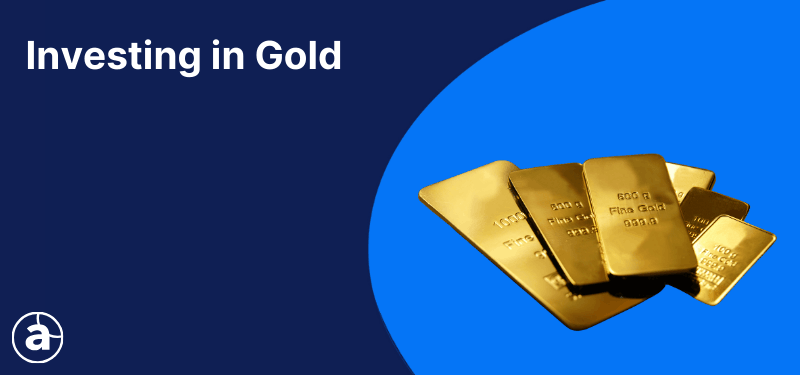
Investing in physical gold entails purchasing and storing gold bullion or coins.
Unlike the other methods of gold investing which we’ll look at, this is the only one which provides investors with direct ownership of gold. Consequently, this method might appeal to long-term investors who would value having direct control over the tangible asset.
However, whilst this may also seem like the most intuitive way to invest in gold, it does present certain practical issues, such as transportation, secure storage and insurance. Moreover, physical gold may be less convenient to liquidate when compared with other investment methods.
Gold Mining Stocks
Gold mining stocks are the shares of companies which are engaged in the exploration, mining and production of gold.
Naturally, the performance of such companies is heavily influenced by the price of gold, which provides investors with exposure to the precious metal.
Furthermore, many gold stocks pay dividends (although these are never guaranteed), which can provide investors which an income element that isn't available when investing in the physical metal.
However, the performance of such stocks will also be influenced by company specific factors, such as costs, reputation and management decisions. This may be unattractive to investors whose main goal is exposure to gold.
An example of a gold mining stock is Newmont Mining Corp, which is the largest gold mining company in the world by market capitalisation.
Gold ETFs
Gold Exchange-Traded Funds (ETFs) are a type of investment fund which provide investors with exposure to gold. Unlike mutual funds, ETFs are traded throughout the day on stock exchanges, in the same manner as a company’s shares.
We can identify two different types of gold ETF:
- Physically backed gold ETFs; and
- Gold mining ETFs
Physically Backed Gold ETFs (Gold ETCs)
Physically backed gold ETFs aim to track the price of gold by buying and holding physical bullion in vaults on behalf of its shareholders.
Each share represents a fractional interest in the total gold held by the ETF; however, shareholders cannot typically redeem their shares for physical gold.
Gold ETFs provide transparent exposure to gold prices whilst eliminating some of the headaches associated with owning the physical metal.
The fund takes care of buying and safely storing the metal with its custodian. Furthermore, shares of gold ETFs tend to be very liquid, making them easier to buy and sell as and when required.
However, they do not provide direct ownership and, in exchange for their management, ETFs charge an ongoing annual fee.
Due to UCITS diversification rules, ETFs in the EU and the UK are prohibited from investing in a single asset. Consequently, physically backed gold products in Europe are typically structured as Exchange-Traded Commodities (ETCs).
Gold Mining ETFs
Gold mining ETFs are designed to track indices composed of gold mining companies.
Consequently, they provide investors with diversification across a variety of gold mining stocks through a single investment. This can help reduce the company-specific risks associated with investing in individual stocks.
Given that many gold mining stocks pay dividends, these types of ETFs may also distribute dividends to shareholders.
Unlike physically backed gold ETFs, which provide direct exposure to gold prices, gold mining ETFs provide indirect exposure to the gold market. Their value is influenced, not just by the price of gold, but also the performances of the companies included in the index.
Again, investors should also consider the ongoing annual fee that gold mining ETFs charge. For example, the iShares Gold Producers UCITS ETF has a total expense ratio of 0.55%.
Trading Gold Using Derivatives
Trading gold using derivatives allows traders to speculate on gold prices without owning the physical asset.
Unlike the other ways of investing in gold we’ve examined, derivative instruments are primarily used for short-term trading and are not designed for long-term investment.
They are typically traded using leverage, which can significantly increase the risk of trading by amplifying potential gains and potential losses. Unlike the other methods we've looked at, derivatives allow traders to speculate on rising and falling prices. In addition to being used for speculating on short-term price movements, derivatives may also be used by investors for hedging.
The most common types of financial derivatives are:
- Contracts for Difference (CFDs): Gold CFDs represent an agreement to exchange the difference in the price of gold between the opening and the closing of a position.
- Futures Contracts: Gold futures contracts are an agreement to buy or sell gold at a predetermined price on a set date in the future.
- Options Contracts: Gold options give traders the right, but not the obligation, to buy or sell gold at a predetermined price before a fixed future date.
What Affects Gold Prices?
For those considering investing in gold, it’s important to understand individual factors which can influence its price. Below, we’ve listed some of the most important drivers:
- Inflation: When inflation rises, demand for gold tends to rise as some investors seek to preserve their purchasing power. This can push up gold prices.
- Interest Rates: Higher interest rates increase the opportunity cost of holding a non-yielding asset like gold. Consequently, higher rates usually dampen demand for gold. The opposite is also true.
- Economic/Geopolitical Uncertainty: Such scenarios tend to increase demand for gold due to its safe-haven status.
- Jewellery and Industrial Demand: Jewellery continues to account for a significant amount of global gold demand, as does industrial demand for gold in technology and other areas.
- The US Dollar: Like most commodities, gold is traded in US dollars. A weaker dollar makes gold cheaper for foreign buyers, which can boost demand.
How to Invest in Gold: A Step-By-Step Guide
So, now we know the why people invest in gold and the top ways of doing so, how can investors get started?
- Define Your Goals
- Do you want to invest in gold for the long-term or are you looking for short-term trading opportunities?
- Choose Your Approach
- Consider which method of investing in gold is most suitable for your purposes.
- Select a Broker
- Register with a broker which provides access to your chosen market.
- Decide How Much to Invest
- Determine what proportion of your portfolio you want to allocate to gold.
- Place Your Order
- In your brokers trading/investment platform, select your desired asset, fill out the trading ticket and send your order to the market.
Frequently Asked Questions
Is it worth investing in gold?
This depends on what the goal of your investment is. Many investors choose to use gold to attempt to hedge against inflation or as a safe-haven during times of upheaval. However, it's not guaranteed to do either of those things. Like any other investment, investing in gold carries risk.
What factors affect the price of gold?
Gold prices can be affected by a number of factors including inflation, interest rates, economic/geopolitical uncertainty and the value of the US dollar.
Are gold ETFs available in Europe?
Physically backed gold ETFs are not available in the EU or UK due to UCITS diversification rules. Consequently, exchange traded physically backed gold products are typically structured as Exchange-Traded Commodities (ETCs).
The given data provides additional information regarding all analysis, estimates, prognosis, forecasts, market reviews, weekly outlooks or other similar assessments or information (hereinafter “Analysis”) published on the websites of Admirals investment firms operating under the Admirals trademark (hereinafter “Admirals”) Before making any investment decisions please pay close attention to the following:
- This is a marketing communication. The content is published for informative purposes only and is in no way to be construed as investment advice or recommendation. It has not been prepared in accordance with legal requirements designed to promote the independence of investment research, and that it is not subject to any prohibition on dealing ahead of the dissemination of investment research.
- Any investment decision is made by each client alone whereas Admirals shall not be responsible for any loss or damage arising from any such decision, whether or not based on the content.
- With view to protecting the interests of our clients and the objectivity of the Analysis, Admirals has established relevant internal procedures for prevention and management of conflicts of interest.
- The Analysis is prepared by an analyst (hereinafter “Author”). The Author Admirals is an employee /a contractor for Admirals. This content is a marketing communication and does not constitute independent financial research.
- Whilst every reasonable effort is taken to ensure that all sources of the content are reliable and that all information is presented, as much as possible, in an understandable, timely, precise and complete manner, Admirals does not guarantee the accuracy or completeness of any information contained within the Analysis.
- Any kind of past or modelled performance of financial instruments indicated within the content should not be construed as an express or implied promise, guarantee or implication by Admirals for any future performance. The value of the financial instrument may both increase and decrease and the preservation of the asset value is not guaranteed.
- Leveraged products (including contracts for difference) are speculative in nature and may result in losses or profit. Before you start trading, please ensure that you fully understand the risks involved.

![Day Trading the Futures, CFDs, and Forex Futures Market [2026 Edition]](https://dynamic-images.admiralmarkets.com/800x,webp/fxmedia.s3.eu-west-1.amazonaws.com/featured_images/68ac60e59d0af1756127461.png)
